
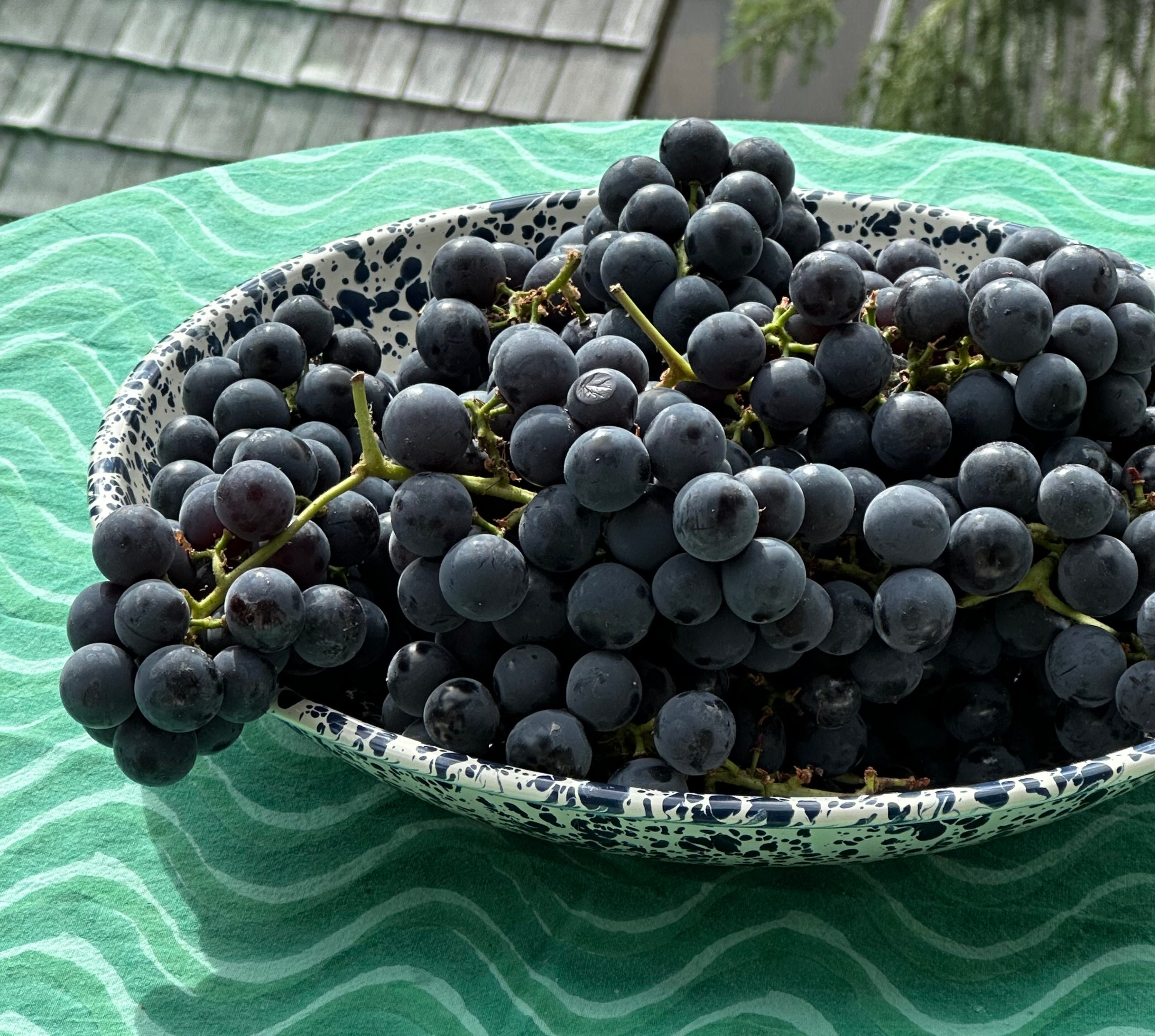
Picture this: trellises of grape vines creating a shady canopy over your dinner table, plucking grapes from the vine as a sneaky mid afternoon snack. Growing grapes in your backyard is a picturesque ideal but generally turns into a party for the squirrels and racoons seeking a feast. I’ve never personally grown grapes, just bore witness to their mess and celebrated their bounty. So when September rolls around and offerings of those beautiful heirloom grapes growing in backyards all around the city start to pop up in my inbox and on facebook marketplace (my favourite place to source fruit) I race to gather whatever I can and hold onto summer just a little longer.
There are some wonderful books out there about city fruit. Some of my personal favourites include Helena Moncrieff’s The Fruitful City: The Enduring Power of the Urban Food Forest and Kate Lebo’s The Book of Difficult Fruit. Yes, lots of people care tenderly about their backyard bounty - but many are just unwitting (and/or unhappy) stewards of plants and trees that others have left behind. That’s where you and I come in.
Grape jam has fallen to the wayside in favour of its simpler and more gelatinous cousin – grape jelly. What’s the difference between jam and jelly you may ask? Jam is made from the pulp and skins of the fruit, whereas jelly is made from the extracted juice. Although thought to date back to Ancient Rome, seedless grapes were only introduced to the US in the mid 1870’s. Grape jelly’s popularity was uncontested until that point since, as you can imagine, it’s much easier to create juice simply by running the pressed grapes through a sieve to press out all the seeds. However, if we’re limiting ourselves to these seedless (Thompson variety) grapes when making jam, we’re missing out on all the beautiful heirloom varietals which, yes, tend to have multiple seeds in their goopy centres. Plus, jelly requires more sugar and you lose all that natural pectin and skins!
So, if we want to make jam we have the option to buy seedless supermarket grapes. But all those heirloom backyard grapes are still as seedy as ever. So what’s to be done? There are a few options:
Peel the skins, mash up the pulp, and strain out the seeds.
Cut each grape in half and pull out the seeds individually.
Get over it and eat jelly!
1 and 2 are ridiculously tedious. But I do love that about cooking…
Now for the recipe…
Grape Jam
When making jam, a scale is essential. I follow the measurements below whenever I make any kind of jam, but with adjustments depending on the sweetness of the fruit. I usually can a few jars, but if you’re not confident with the canning then skip it and load your jam into clean jars to keep in the fridge and give away to friends and family to keep in their fridges.
The below makes about 4 large jars of jam. Mine tasted like the essence of grape, a good kind of cough syrup (if that’s possible). It’s a labor of love - as always.
INGREDIENTS
2kg Grapes (seedless or de-seeded)
750g sugar
185 lemon juice
METHOD
If you’ve managed to source some heirloom grapes, de-seed them! It took me about an hour a kilogram so keep that in mind. Put on a good show! Drink a martini! Make a night of it!
Squeeze the lemons. It is essential that the lemon juice is fresh to balance the acidity of the jam and to be an uber natural source of pectin.
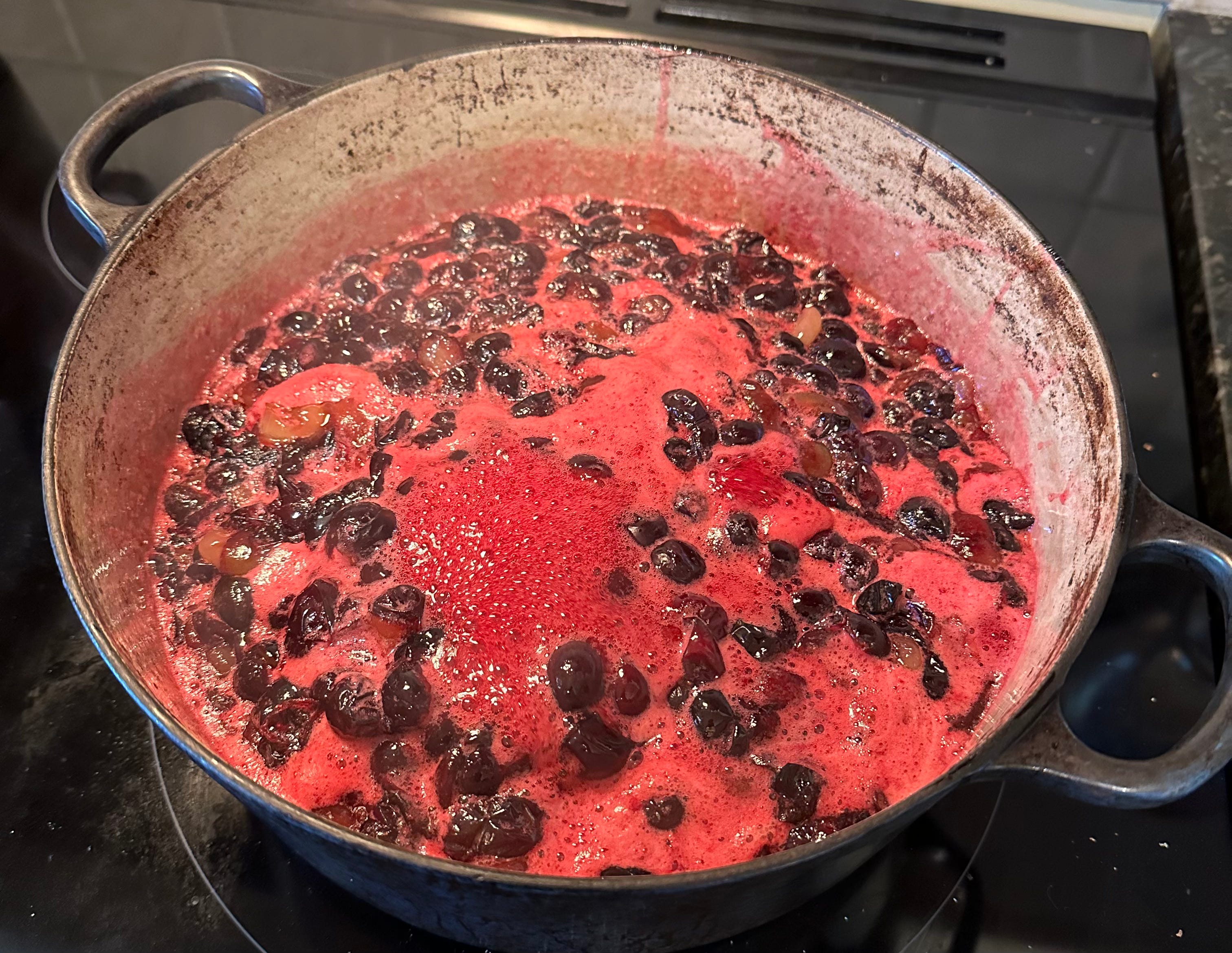
Once your grapes are ready to go, prep your jars however you usually do (or don’t) and load all your ingredients into a large heavy bottomed pot. I like to use a dutch oven because I find that the jam is less likely to burn.
Turn the heat to medium high and watch closely as the fruit bubbles and begins to look liquidy. Stir often. If some of your jam burns and sticks to the bottom of the pot, don’t panic. Pour directly into a new pot leaving the burnt bits behind and continue cooking.
When the fruit has bubbled and then darkened and thickened, about 1-1 1/2 hours, put a small plate into the freezer. Take the plate out after a few minutes and plop a spoonful of jam onto it. If the jam hardens and the skin of the jam crinkles when you push it from one side with your finger, then it’s ready.
Pour the jam into jars and relish in the fruits of your labor!
Thanks for reading!
Love,
Charlie